10 ene 2009

THE FALL OF COMMUNISM


By: Miguel Molina

HISTORICAL ANTECEDENTS: THE RISE OF THE SOVIET UNION

While the 19th Century was fundamental for the modernization of the great European economies, Russia continued depending on agrarian economy and feudal relations of vassalage between lords and peasants. The social Russian structure was pyramidal with the Czar on the top, always ignoring people’s situation that in most cases were in poverty. During that time Karl Marx and Frederic Engels, considering the social inequality and power abuses, started to build a new political, social and economical system based on the proletariat capacity and rule. The Communist Manifesto, a book written by Marx and Engels, and the Capital written only by Marx, inspired many political and social movements in Europe.

This ideological doctrine was denominated at first Marxism, and it consisted of the destruction of private property and religion, because both were instruments used by the bourgeoisie to alienate the proletariat. Marx explained his proposals saying that the changes of human society are produced by the eternal fight of classes, but the modification of this relation results in evolutionary steps; he called this process Historical Materialism. For Marx the history of humanity is based on 5 parts: the primitive communism, oriental despotism, slavery, feudalism and capitalism. The next evolutionary step would be the socialism that had to overthrow the capitalism with the Proletarian Revolution. Marx said that it was “historically unavoidable”.

In Russia the unsustainable social situation made people organize a popular protest in front of the Winter Palace of Saint Petersburg; they wanted better labor conditions. Czar Nicolas II, afraid of the thousands of workers congregated in the protest, ordered to open fire against the people. Many people died because of the military repression. After this a lot of revolutionary movements started to conspire against the monarchy. The Czar established some reforms as gave more legislative power to the Duma (Parliament) and let the universal vote to recover the national stability. But the light of the revolution was burned.

In 1917 a new revolutionary movement began in Russia guided by the Bolsheviks, a group of workers who wanted an absolute revolution of the Proletariat that included the spread of blood. The Czar ordered the Army to end the revolutionary groups but the unhappiness of the soldiers resulted in divisions inside the army, so part of them decided to help the revolutionary cause. This situation forced the Czar to resign and a civil war was started in the country. In 1918 the Royal Family was killed, in 1921 the White Army (loyal to the Czar) was defeated and in 1922 the Union of Soviet Socialist Republics was born.

ECONOMICAL GAP BETWEEN WESTERN AND EASTER EUROPE

Vladimir Lenin was the first leader of the new nation and of the Communist Party; he also was the most important leader during the Revolution. After his death Stalin took power and began an era of repression persecutions of his opponents. His management of the economy consisted of Quinquennial Plans for which the capital obtained by the industry was invested in other industries that helped to modernize the armament and the army, instead of providing for the Russian society.

During the Second World War Stalin defended his territory using the cold climate as his best ally to destroy the German invaders. When Hitler was defeated Stalin decide to took the control of the countries located to the east of Berlin, so he transformed them in communist nations which were satellites of the Soviet Union.
After the Second World War the international hegemony was divided into two big blocs. One formed with occidental countries that were liberal, democratic and with capitalist economies led by the United States; and a bloc formed with the communist countries of Europe, Asia and Africa led by the Soviet Union.

The contrast between the Free Market Economy of the western countries and the socialist economies conducted by the State was evident. The western societies were developed by industries and businesses, and their people had a good standard of living, they get jobs, housing and all things that their work can give to them, creating a society of consumers and producers. On the other hand, the communist countries had no private investment; the state owned all the means of production, there was no freedom of expression and the citizens lived in bad conditions because the government preferred to spend money on the army and not on the people. As it was not possible for individuals to invest the communist countries didn’t benefit from private initiative therefore the supply of goods was very limited which resulted in a very low standard of living in comparison to the west. Consequently, many people in the eastern economies wanted to flee to the west which by the end of the 80’s became unstoppable.

THE COLD WAR AND THE FALL OF COMMUNISM

By the year 1949 the United States signed with some democratic countries the creation of the North Atlantic Treaty Organization (OTAN) to defend themselves from a Soviet attack and 6 years later the Soviet Union signed a treaty called the Warsaw Pact with the communist countries of Eastern Europe (except Yugoslavia) and China as an important observatory country. This was the beginning of a situation of tense international calm denominated Cold War.

The Cold War was an ideological and military conflict between the United States and the Soviet Union but without a direct confrontation. A popular phrase explained that condition: “Peace impossible, war improbable. Anyway the two powerful nations tried to prove their superiority in conflicts as the Korean War and later the Vietnam War, both became a confrontation between communism and capitalism. They also used their influence in Cambodia, Mozambique, Angola, Cuba, Chile and Nicaragua.

The competition between the two hegemonies was centered on armament and technology. The Soviet Union promoted the nuclear armament and the creation of strong missiles for an eventual attack to the west in a hypothetical North American attack. The worst tense moment took place when the United States tried to stop the communist dictatorship in Cuba with the unsuccessful attempt of invasion in the Bahia of Cochinos that provoked a Soviet reaction with the deployment of nuclear missiles in Cuba with the sufficient reach to the US coast. This tension was denominated the Missiles’ Crisis and it ended with an agreement between Kennedy and Khrushchev in which the Soviet Union removed the missiles meanwhile the United Stated compromised to not invade Cuba.

The armament competition came to an irrational level which meant that in the end of the 80’s the two hegemonies had the sufficient nuclear power to destroy the Earth a lot of times, so the two regimes knew that their destruction was sure in an eventual war. The end of this competition and the first steps to the end of the communism was the Strategic Defense Initiative of the United States that consisted of an umbrella or network of protection against Soviet missiles. The Soviet Union tried to do the same but for those years their economy was in crisis; they could not take care of the basic needs of the population, and they had to accept their impossibility to continue competing with the United States.

The collapse of the Communist system started and was unavoidable. Mijail Gorvachov took the power of the Soviet Union in 1985 and he promoted two important decisions to finish to Cold War because it was unsustainable, and also to modernize the Soviet Union. The first one was Glasnot that consisted of transparency in political decisions and giving more freedom to the society. The second and the most important measure was the Perestroika which consisted of economic reforms that allowed private investment and property, and opened the country’s economy.

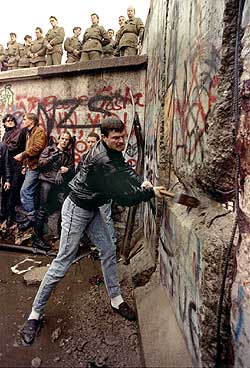
In 1989 the Berlin Wall which divided East and West Berlin and was the symbol of the division between communism and capitalism, was torn down. As a matter of fact, at that time it was impossible to stop the avalanche of people fleeing from the east to the west, therefore the communist society was not sustainable anymore and collapsed. In 1991 Mijail Gorbashchov dissolved the Soviet Union and freed the satellite countries, so the era of communism came to an end.

VALUE: LOYALTY

After the fall of the communism and the disintegration of the Soviet Union some people thought that that was the beginning of the capitalist era for the whole world. But what is important to say is that the left side of politics learned about their own mistakes during the Soviet Union and communism, and they organized themselves again to participate in politics putting aside the old socialist ideas in which democracy was used as an instrument. The loyalty consists in continuing to believe in socialism still today but thinking in democracy with a deep conviction and as a principle of life, the way it has happened in Europe. The new socialist European parties defend their ideas but they don’t agree with the use of violence and armed fight. The best lesson about the fall of communism is to understand that it is possible to be socialist without thinking that the Soviet Union is a good example of a good society and also to accept that to have another alternative to capitalism is healthy for democracy. No one owns the truth.

PERSONAL OPINION

In my opinion the fall of communism was an important historical episode to learn about the right and wrong economical and political methods that complement a system. I don’t think that the left is a defeated political project; some of their forms failed as the communism used in the Soviet Union, but the search of social justice and equality is stronger than ever before and what capitalism and socialism have to do is to not repeat the great historical mistakes of the past. The purpose doesn’t justify the means as Nicolas Machiavelli said, because if we use anti democratic methods, we already condemn the purpose. The leaders of the Soviet Union made a divorce between the ideas of welfare for their society and the regime of terror and repression that they created. They didn’t keep individuals as the center of their purpose because in what they invest the major part of their time was in the armament competition against the United Stated. The communism didn’t lose the war against capitalism, they defeated themselves with an irresponsible management of the economy, using anti democratic methods and creating a society of fear and panic where freedom didn’t exist.

25 oct 2008

CARTA A UN TODO LLAMADO ECUADOR


Bar Harbor - Maine, 28 de Septiembre del 2008

Querido Ecuador:

Hoy, 28 de septiembre del 2008, a las 11:03 de la noche, siento la imperiosa necesidad de escribir esta carta para expresar una emoción que me desborda, luego de la intensidad de la jornada vivida hoy. Pasaron 178 años desde aquel remoto 13 de mayo de 1830, cuando los conspiradores que traicionaron a Bolívar decidieron fundar el Ecuador. Creo que es oportuno – por no decir indispensable - resumir lo que han sido décadas dedicadas a descubrir el enigma de la nacionalidad ecuatoriana. Casi un siglo después, el primer hombre a quien se le ocurrió que Ecuador podría ser un país, terminó quemado y arrastrado por conservadores mojigatos en las calles de Quito. A pesar de ese precedente nefasto, la búsqueda de nuevos significados y contenidos se ha vuelto urgente. Por eso hoy amanecemos en un país distinto.

¡GANAMOS! Claro que lo hicimos. Con el esfuerzo de mucha gente y de muchos sectores. Ganamos con un amplio margen a pesar de la campaña de miedos y temores de una parte minúscula y elitista de las iglesias Católica y Evangélica que, junto a políticos oportunistas despertaron cucos garcianos para dizque darnos lecciones de moral. También ganamos a pesar de los medios de comunicación que demostraron una oposición dogmática al proyecto constitucional; poco o nada influyó el pronunciamiento de Carlos Vera en la decisión de la gente, puesto que el porcentaje de votos nulos es irrisorio. Sobretodo, ganamos a pesar del “establishment” y sus representantes caducos, quienes usaron los más bajos pretextos para convencer a los electores de que la nueva Constitución es abortista, hiperpresidencialista, chavista y hasta “pachamamista”. Sin embargo, a ellos les debemos mucho: si no fuera por gente como Blasco Peñaherrera Padilla, por citar un ejemplo, no nos habríamos dado cuenta de la calidad humana de quienes dicen defender el Estado de derecho y la institucionalidad, cuando lo que defienden son sus intereses personalísimos. Lo pongo a él como referente del pasado, ex vicepresidente de “todos” los ecuatorianos, abogado defensor de multinacionales en desmedro del país, y que, además, declaró que los adolescentes somos mentalmente incapaces (yo tengo 16 años) para ejercer el sufragio. Perdón, ¿no fue durante ese régimen que se produjo el caso Restrepo? En fin, podría seguir con incontables ejemplos de defensores del “establishment”, como el coronel demagogo que exhortaba al voto por el NO, y que seguramente es el as que ese “establishment” tenía bajo la manga. Son ejemplos que nos demuestran que estamos en la línea correcta.

Pero lo de hoy, más allá de ser una Victoria aplastante, nos tiene que conducir a comprender que, como pocas veces en la Historia, la gran mayoría del pueblo nos otorgó a los que estamos por el cambio, la responsabilidad de demostrar que el Ecuador que comienza hoy es un país diferente. Difícil tarea como para dejarla únicamente en los hombros de Correa. Que nadie se haga el quite porque el cambio comienza, primero, en creer que es posible y, segundo, en comenzar a trabajarlo. Y es que hace un poco más de 3 años, cuando el cardiólogo frustró nuestro deseo de que se fueran todos, parecía imposible que un proceso constituyente de tal magnitud se realizara con legitimidad. Eso si, le debemos al liderazgo de Correa la viabilización de la gran tarea de concretar un cambio clamado durante tantas décadas de denigración republicana. Definitivamente, el Ecuador del siglo XXI es uno
que vence y construye.

Por hoy, solo por hoy, de la partidocracia solo quedan cenizas fétidas, que no alcanzan a borrar las pruebas de todos los abusos que cometieron. Este 28 de septiembre es la culminación de una parte fundamental del proceso de cambio: establecer reglas de juego más justas y democráticas. Sin embargo, ahora comienza otra etapa incluso más difícil, que es construir el gran Estado Constitucional de Derechos y Justicia con la Nueva Constitución y, sobretodo, demostrar que ésta es el primer paso a un cambio radical y profundo que tiene como objetivo el verdadero bienestar de la sociedad ecuatoriana.

Eso es todo, es la 1:14am del 29 de septiembre del 2008, y muchísimas ideas se me han escapado antes de ser plasmadas en esta carta que va dirigida a un Todo, llamado Ecuador, del cual me siento orgulloso se ser parte. No cabe duda que hoy demostramos nuestra capacidad de emprender y escribir nuestra propia historia sin la necesidad de que vacas sagradas de apellidos notables nos dicten el destino de nuestros días. Siento la aurora de una madrugada lejos de mi patria, entre las hojas rojizas de los arboles otoñales, y no puedo, ni debo, terminar de escribir esta carta sin expresar mi agradecimiento profundo y eterno a todos los adultos que votaron por el Si – entre ellos a Rafael Correa – porque me demostraron que es posible seguir siendo joven por siempre y nunca perder la capacidad de transgresión y asombro.

Como diría Neruda “a lo lejos alguien canta, a lo lejos…” porque estoy seguro que los 270 mil kilómetros cuadrados de patria altiva y soberana están de fiesta, y que pronto regresaré al nuevo Ecuador, aquél que siempre soñé, pero con el compromiso profundo de continuar luchando por este proceso de RUPTURA de esquemas y construcción de bienestar, porque repito, esto es solo el inicio.

Un abrazo,

Miguel Molina Diaz
Bar Harbor - Maine

20 ago 2008

LA EDUCACIÓN Y LA CONSTITUCIÓN

Por: Miguel Molina Díaz


El proyecto constitucional que se someterá a referéndum el próximo 28 de septiembre es una apuesta para romper paradigmas e implantar innovaciones que contradicen las teorías más conservadoras del constitucionalismo. En cuanto a la Educación, la nueva Carta Magna ha despertado polémica y controversia en ciertos sectores que poco o nada han profundizado en el texto constitucional. Las afirmaciones que se han esgrimido como criticas categóricas al texto son diversas, pero considero que tienen falencias insostenibles. En primer lugar, me referiré a la tergiversación que habla de que se limitará la libertad de cátedra porque el Estado controlará la educación en una suerte de adoctrinamiento político. ¡Parece que vivimos en países diferentes! Entonces, quisiera que me respondan ¿cuándo el pensum de educación no ha sido dirigido por el Ministerio de Educación? ¿En qué país del mundo las autoridades educativas no coordinan un marco para garantizar que todas las instituciones brinden una educación de calidad a los estudiantes? Pero bueno, aquí no termina la campaña de mentiras. También dicen que con la Nueva Constitución desaparecerá la educación privada y religiosa. Sin embargo el Art. 345 establece que “la educación como servicio público se prestará a través de instituciones públicas, privadas y fiscomisionales.” Y es que leer el texto constitucional es la única arma que tenemos en contra de los engaños y pretextos de los defensores del estatu quo y, en consecuencia, es también el único mecanismo para ejercer un sufragio responsable. Dicen que se impondrá una educación laica a todos los alumnos en todas las instituciones educativas; sin embargo, el Art. 29 claramente especifica que “las madres y padres o sus representantes tendrán la libertad de escoger para sus hijas e hijos una educación acorde con sus principios, creencias y opciones pedagógicas.” Y es que los campañistas del No tienen una facilidad para inventar escenarios preocupantes y perversos. Pienso que los aportes de esta Constitución a la educación del país, no solo en lo referente a lo académico, sino también en lo cultural, habla de fomentar una sociedad más incluyente que reconoce al kichwa y el shuar como idiomas oficiales de relación intercultural; que reivindica la dignidad de las personas con el sumak kawsay; y que establece la Soberanía Alimentaria como mecanismo para tener el derecho a no morirse de hambre. Aseguro con profunda convicción que este proyecto constitucional, en cuanto a educación, es mucho mejor que la carta vigente. Debemos tener bien claro que esta es la constitución de la educación gratuita hasta el tercer nivel de educación superior.

miguelmolinad@gmail.com
C.I.: 171799013-7

13 ago 2008

EL DEBATE CONSTITUCIONAL

Por: Miguel Molina Díaz


Las últimas semanas el debate se ha reducido a los temas impuestos desde las cúpulas de la religión católica y de la oposición: la homosexualidad, el aborto, la pacha mama…. Todos esos temas han salido para contrarrestar la aprobación de la constitución porque, según ellos, el texto promueve esas tendencias. He oído varias hipótesis que intentan explicar la homosexualidad, ¡pero es la primera vez que a alguien se le ocurre que una de esas puede ser la Constitución! Hay que preguntarse si las personas homosexuales y las mujeres que han decidido abortar leen la constitución antes de serlo o hacerlo. Sería bueno que los voceros de estas tergiversaciones reconozcan que esta constitución no se limita a garantizar la vida biológica, como lo hace en el artículo 45, porque que nos plantea una visión más humana y digna de la vida de todos. ¿Acaso la cúpula católica o sus seguidores han garantizado salud, educación, alimentación y vivienda, gratuita y de calidad a todos los niños y niñas en esta vida terrena? La Nueva Constitución si profundiza estos derechos y de ahí la importancia de leerla antes del referéndum. Cuando leamos el texto, sabremos que el Art. 67 especifica que el matrimonio será constituido entre un hombre y una mujer, lo cual no hace la Constitución del 98, que señala que esa institución familiar estará constituida por personas y contrayentes. En contra de los rumores malintencionados, leamos también el Art. 68, que especifica que la adopción será únicamente entre parejas del distinto sexo. En cuanto al tema sobre la mención a la Pacha Mama antes que a Dios, espero ciertamente que se trate de una afirmación producto del desconocimiento, caso contrario, significaría que pretenden tergiversar mal intencionadamente los textos constitucionales en la opinión pública. “Pacha” significa naturaleza y “mama”, obviamente, madre, por tanto estamos hablando de respetar la relación del ser humano con el entorno natural (madre naturaleza) y no de reconocer un dios pagano. Además, no es lo mismo “Pacha Mama” que “Pacha Cama”: la segunda podría considerarse deidad en la cosmovisión indígena. ¡Tal vez están confundidos de términos quienes, por su condición de ciudadanos realizados, desconocen la cultura indígena! Es indignante la manera cómo quieren manipular nuestros principios morales, más aun cuando desvirtúan el articulado constitucional para su beneficio. Ojalá logremos cerrar este debate, fundamentado en miedos y prejuicios, para comenzar uno más interesante y productivo para el país, que consiste en analizar el real contenido de la Nueva Constitución, que es más mucho amplio que en tres temas utilizados con una fe mal entendida.

miguelmolinad@gmail.com
C.I.: 171799013-7